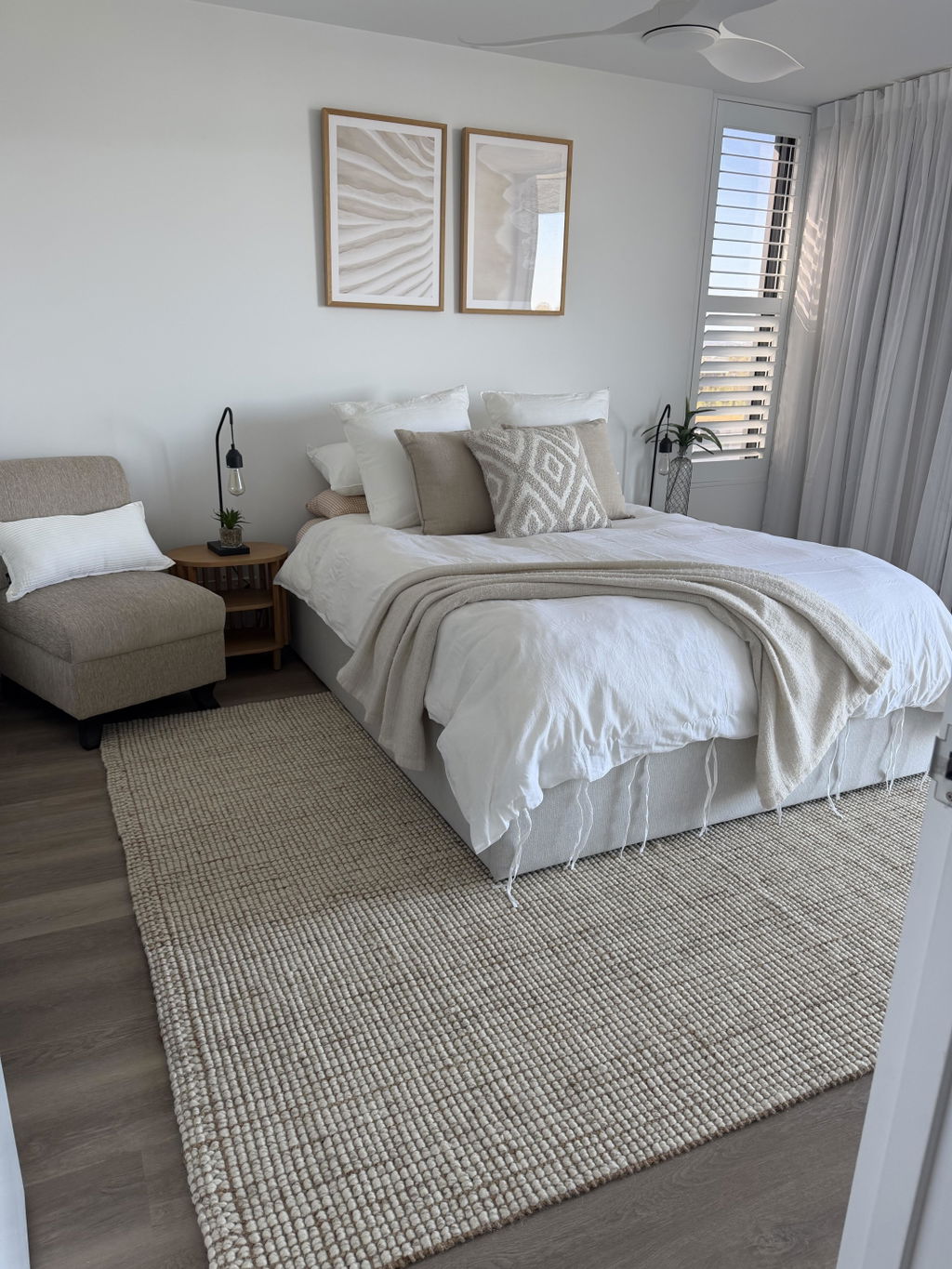
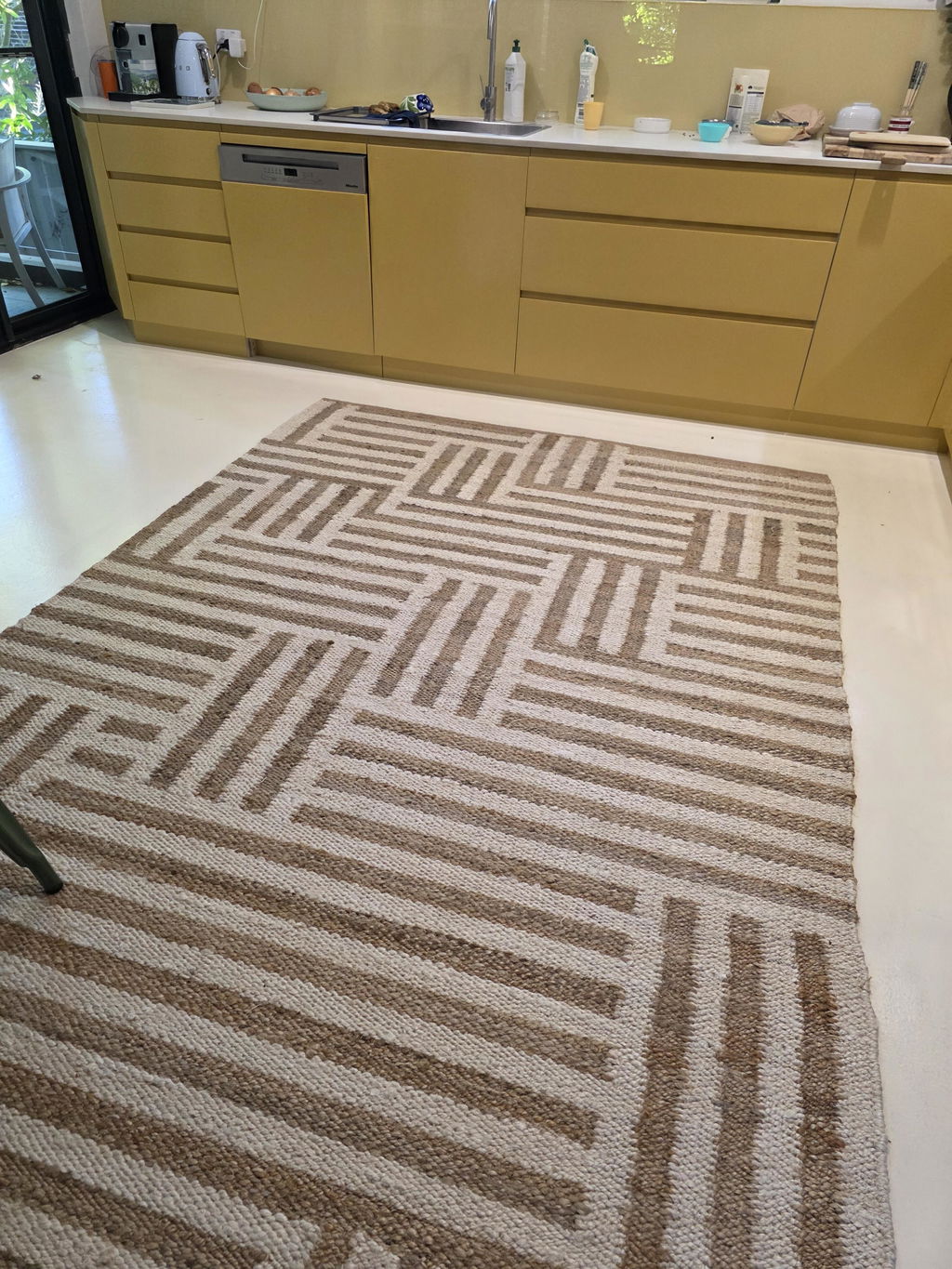
AI-generated styling illustration
Yes, a rug can work over carpet. It can bring colour to a neutral room or give a seating area a clearer shape. The important checks are whether the rug lies flat, whether it moves during everyday use, and whether doors and furniture can move freely. Your existing carpet, the rug’s construction and the underlay all affect the result.
Start with the carpet you have, then choose the look. A beautiful rug that keeps bunching up will be frustrating to live with.
When a rug over carpet makes sense
A rug is useful when you like the comfort of a carpeted room but want a different colour or pattern. It can bring a sofa, coffee table and armchairs together visually, or introduce a favourite design beside a bed. In a rental, it may let you personalise a room while keeping the existing carpet.
Before covering an area, check the carpet’s condition. Deal with dampness, loose edges or existing damage first. A decorative layer should not hide a problem that needs attention.
Check the carpet pile first
A short, firm carpet is a sensible starting point for layering. Thick, soft carpet needs closer attention because the complete arrangement may feel uneven or allow the rug to move. Manufacturer guidance varies: Ruggable’s assembly advice, for example, identifies low-pile carpet as the better surface for its rugs. That is guidance for its own products, rather than approval for every rug.
For a plush carpet, we would start by comparing flatter, lower-profile rugs rather than adding another very deep pile. This is a practical shortlisting suggestion, not a guarantee of stability. A lightweight flatweave can still ripple, so check its backing and the supplier’s advice as well as its thickness.
Loop-pile, cut-pile and textured carpets can behave differently. If you are unsure, send the retailer a close-up photo and ask about the exact combination before ordering.
Choose a rug for the whole room
Think about how the new rug will sit against the existing carpet. On a plain carpet, a floral or geometric design can become the room’s focal point. If the carpet already has a noticeable pattern, a quieter rug is an easy place to start. These are styling choices, so use colours you enjoy rather than treating a particular pairing as a rule.
Our flatweave rugs are a starting point for comparing lower-profile construction, while our floral rugs offer pattern inspiration. Check each product’s specifications; neither collection is a list of rugs tested for use over your carpet.
Fibre alone does not tell you how a rug will behave. A wool rug can have different pile heights, backings and constructions. Our guide to rug types and construction explains the distinctions to look for.
Measure the layout and the door clearance
Measure your furniture arrangement in centimetres and use our rug size planner to compare layouts. Choose a size that relates to the furniture, then check where the edges will fall along your usual walking routes.
Open nearby doors fully and check any low drawers. Allow for the rug’s total thickness, including its backing and the recommended underlay; the advertised pile height may not represent the full build-up. Ask for the missing measurements before buying if clearance is tight.
If furniture will sit partly on the rug, check that it remains level and steady. Furniture placement may help hold part of a rug down, but it does not establish that the exposed edges will stay flat.
Use an underlay intended for carpet
Choose an underlay whose manufacturer explicitly lists carpet as a suitable surface. A pad described simply as “non-slip” may be intended for hard floors. RugPadUSA’s carpet-pad guidance illustrates the distinction: it identifies a specific model for rugs over carpet.
Ask the supplier to confirm compatibility with your carpet and the rug’s backing, which side faces down, how it should be sized, and any restrictions on use or removal. Check the carpet manufacturer’s care and warranty instructions too.
Do not improvise with household tape, adhesive corners or a hard-floor rubber mesh pad. For an adhesive-backed product, get confirmation for the exact carpet and follow its installation and removal instructions. If you rent, check your lease or ask the property manager before using anything that adheres to the carpet.
If the rug moves or bunches
Follow the rug’s unpacking instructions and let it settle flat before assessing the layout. Then check the arrangement during normal use: walking past the sofa, opening doors and moving chairs.
If an edge curls, the rug shifts or a ridge develops, stop using that arrangement until it is resolved. Check the underlay’s placement and compatibility with the supplier. Do not keep adding improvised layers to compensate. Persistent movement may mean the rug, pad and carpet are not a suitable combination.
When cleaning, follow the instructions for both the rug and the fitted carpet. Lift the rug periodically to inspect underneath, and make sure both surfaces are dry before putting it back.
Before you buy
Have these details ready: a photo of your carpet, the rug size you want, the proposed rug’s backing and total thickness, and any tight door clearance. Confirm the underlay and read the return conditions before ordering.
For ideas on combining two decorative rugs, see our rug layering guide. When working over fitted carpet, make flatness and everyday movement the final checks before settling on the look.